Anything the eye can judge can become a model.
We started with SEM images of battery materials, but the method is general: annotate a few dozen images, train, validate, deliver. Below are the kinds of work we have done or are discussing. If yours isn't here, that's the best reason to talk.
Materials · Batteries
Particles, pores, grains, cracks
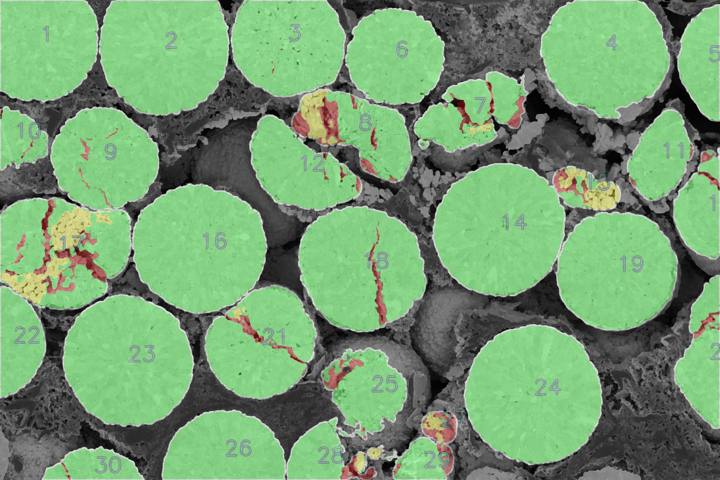
Four analyses are already online; open the web app and use them. Cathode particle size and cracks, electrode porosity, primary-grain statistics inside secondary particles.
Request access now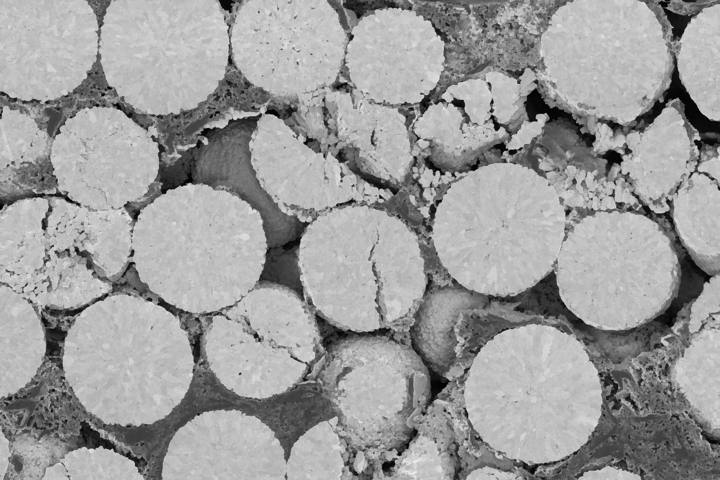
Manufacturing · QC
Solder joints, coatings, surface defects
Cracks, voids, scratches, contaminants, missed coating. Industrial cameras or microscopes both work. Output pass/fail, defect location and area, wired into your production records.
Example image coming: solder joint crack
Biology · Medicine
Cell, colony and fiber counting
Segment, count and measure each object under the microscope. The grain-analysis model originally came from cell segmentation; a new sample is just a new set of annotations.
Example image coming: cell counting
Agriculture · Bulk materials
Grading, counting, foreign-object rejection
Grade particles by size, colour and shape, or pick the rejects out of a batch of good ones. Phone photos are enough to train on.
Example image coming: material grading
From your sample images to a first model, usually within two weeks.
01
You provide 30 to 100 images and your judgement criteria.
02
We annotate and train, then send the result images back for you to check.
03
One more round based on your feedback, then delivery as web or on-premise software.
04
Pricing is agreed per project based on the actual scope, fixed once quoted.